



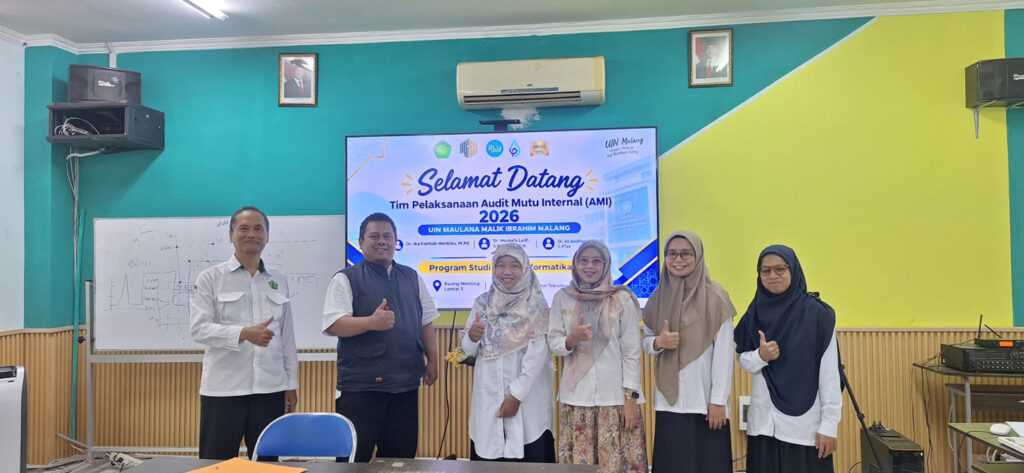
The Lead Auditor presented the findings of the AMI 2026 audit for the Informatics Engineering Study Program. This evaluation was conducted to ensure that the study program’s operations align with the university’s Internal Quality Assurance System (SPMI) standards. Through this audit, program administrators successfully identified best practices, gaps in standard compliance, and opportunities for continuous quality improvement.
The AMI 2026 audit focused on an in-depth evaluation of key sectors specifically education, research, and community service as well as the availability of human resources and facilities. The assessment went beyond merely reviewing document availability; it also verified the integration of the Tridharma (Higher Education Three Pillars) concept into individual courses and teaching materials. Auditors emphasized the importance of objective evidence traceability so that learning evaluation results could serve as a foundation for tangible quality improvement mechanisms.
As a follow-up measure, all AMI 2026 findings will be classified into categories: Positive Findings, Observations, and Minor or Major Non-conformities. Any finding requiring corrective action must be accompanied by a root cause analysis, an action plan, a designated person in charge, and a target completion date. The Informatics Engineering Study Program is committed to fully implementing the PPEPP cycle—comprising Determination, Implementation, Evaluation, Control, and Improvement—ensuring that these audit results serve as a basis for formulating next year’s work program.